Advanced Cell Therapy Development Platform
Advancing Science & Manufacture of Cellular Therapeutics

A strategic publicnprivate initiative integrating cell biology, bioprocess development, pharmaceutical quality systems, translational research and commercial-scale implementation
The Thailand Institute of Scientific and Technological Research (TISTR) and Vega Wellness are advancing an integrated platform for the development of next-generation cellular therapeutics, with a particular focus on allogeneic umbilical cord-derived mesenchymal stromal/stem cells (UC-MSCs).
From biological starting material and cell expansion to analytical characterization, quality control, preclinical evaluation and translational development, the initiative is designed to support the progression of cellular technologies toward reproducible, quality-controlled and clinically relevant applications.
An Integrated Platform for Advanced Therapeutics
Advanced cell therapies require more than the ability to culture cells.
They require an integrated development system capable of controlling biological variability, manufacturing processes, analytical methods, product quality and translational risk.
The TISTR and Vega Wellness initiative brings these disciplines together within a unified scientific and manufacturing framework.
CELL SOURCE & BANKING
Controlled biological starting materials, cell-bank development and traceability.
PROCESS DEVELOPMENT
Standardized isolation, expansion, harvesting and formulation methodologies.
ANALYTICAL SCIENCE
Characterization of cellular identity, purity, viability, stability and biological function.
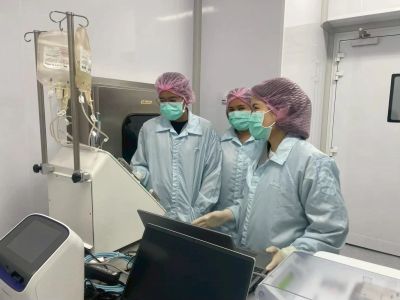
MANUFACTURING & QUALITY
GMP-oriented manufacturing systems supported by pharmaceutical quality and risk-management principles.
PRECLINICAL DEVELOPMENT
Scientific evaluation of safety, biological activity and translational potential.
CLINICAL TRANSLATION
Structured progression toward appropriately governed clinical investigation and real-world application.
TRANSLATIONAL RESEARCH
From Biological Discovery to Translational Evidence
Cellular technologies should progress through structured scientific development rather than moving directly from laboratory observations to clinical claims.
Our translational framework follows a staged development pat
DISCOVERY
Understanding cellular biology and potential mechanisms.
CHARACTERIZATION
Defining relevant biological and quality attributes.
PROCESS DEVELOPMENT
Establishing controlled and reproducible manufacturing methods.
PRECLINICAL EVALUATION
Assessing safety and biological activity in appropriate experimental models.
CONTROLLED MANUFACTURING
Producing cellular material under defined quality systems.
CLINICAL INVESTIGATION
Evaluating safety and clinical outcomes through appropriately designed research.
SCALE-UP & TRANSLATION
Preparing validated processes for broader scientific and commercial implementation.
SCIENTIFIC EXCHANGE
Advancing the Regional Cell-Therapy Ecosystem
TISTR’s scientific activities extend beyond laboratory development to international knowledge exchange across cell therapy, extracellular vesicles, advanced biological manufacturing and translational medicine.
Scientific conferences, workshops and professional education create a forum where researchers, clinicians, manufacturers, regulators and biotechnology organizations can examine emerging science and the practical challenges associated with translating advanced therapeutics.
Key Areas

Scientific Conferences
International scientific exchange across regenerative medicine and advanced biological therapeutics.
Technical Training
Cell handling, manufacturing principles, quality systems and analytical methodologies.
Translational Workshops
Connecting laboratory science with preclinical and clinical development.
Regulatory Science
Supporting informed discussion of evolving standards for advanced therapies.
Building the Infrastructure Behind Tomorrow’s Biological Medicines
The future of regenerative medicine will depend not simply on discovering new cellular technologies.
It will depend on our ability to manufacture, characterize, test and evaluate them with the same scientific discipline expected of modern pharmaceutical products.
Through the integration of national research capability, advanced biotechnology infrastructure and commercial execution, TISTR and Vega Wellness aim to contribute to the development of a sustainable advanced-therapy ecosystem in Thailand.